Certified Professional Dog Trainer- Knowledge Assessed!
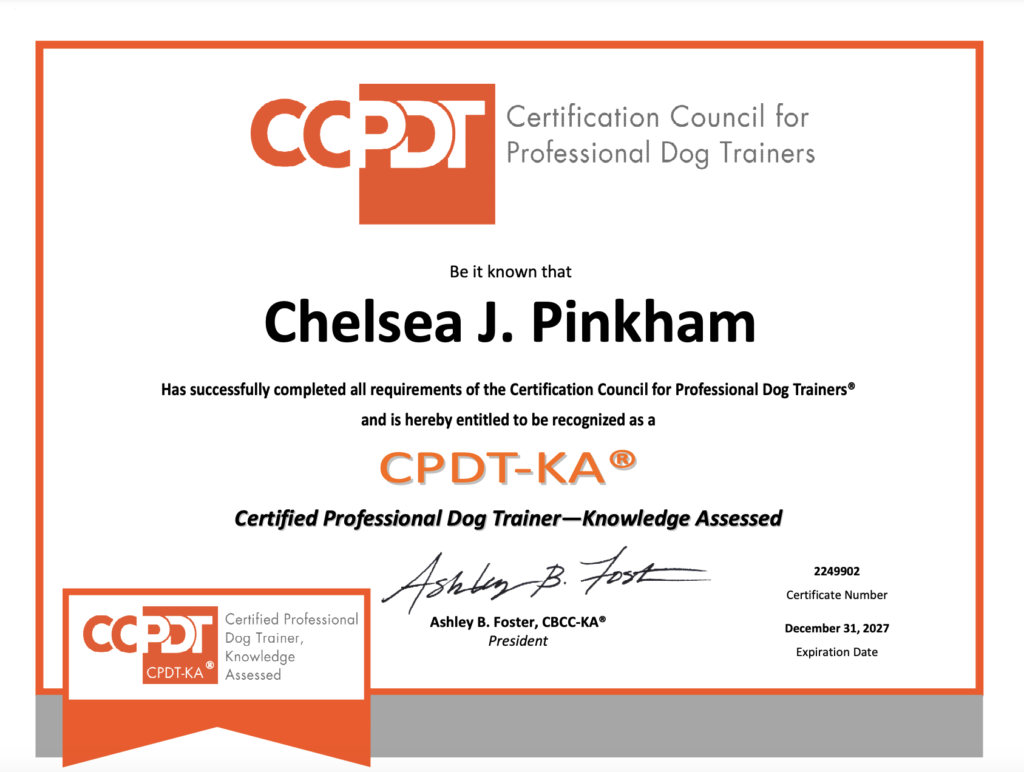
I am incredibly proud to say that after dedicating the last two years of my life to formal education and pouring hundreds of hours into working with client dogs, I have achieved my CPDT-KA credential. Since deciding to dedicate myself to dog training entirely, this has been a predominant career milestone I have worked towards. The last 2-3 months of my life have been dedicated almost exclusively to passing the CPDT-KA exam.
Qualifications for the CPDT-KA credential include a minimum of 300 hours of hands-on dog training experience in the field, a referral from a veterinary professional or a CCPDT certificant, and the passage of a comprehensive, 200-question exam. Exam content covers a wide range of topics, from canine ethology, husbandry, and learning theory to instructional skills and legal regulations. Studying for the exam is an all-consuming undertaking!
It may shock some to learn that dog training and behavior is a completely unregulated field. Frighteningly enough, there is zero accountability or oversight from any universal governing body in the United States when it comes to practices that have a permanent and lifelong impact on the relationship between caregivers and their dogs. As a dog caregiver, navigating this murky world can be risky, confusing, and challenging. Who can you trust? Do you simply take a trainer’s word for their experience and knowledge? How far does “hands-on experience” really go?
Organizations like the Certification Council for Professional Dog Trainers hold behavior professionals accountable, requiring minimum hands-on experience hours, thorough evaluation of knowledge in an exam format, a commitment to pursuing continuing education units, attestation to a formal code of ethics, and more.
While credentials like the CPDT-KA should not be the end-all when it comes to screening prospective trainers, it provides some oversight and accountability to the way in which behavior professionals conduct themselves in interactions with both dogs and human clients.
CCPDT does still allow certificate holders to use aversive methodology (something I don’t do in my training), but not before the entirely of the Humane Hierarchy of Behavior Change has been exhausted. Some exceptionally harsh methodology, such as the use of two e-collars on a dog at once or the cutting off of a dog’s airway as a training tactic, are banned outright by the organization and can lead to the revoking of credentials. CCPDT and other major animal behavior institutions are continuing to evolve in their positions on certain controversial topics in the training world, which is part of the reason why trainers must recertify every three years and constantly pursue continuing education units.
The pursuit of formal credentials should be baseline in a trainer’s career goals. I’m proud to officially be able to “practice what I preach” in this area. I have every intention of continuing to pursue further credentials in every possible region of dog behavior and training. Here’s to holding pet professionals to higher standards!